- Home
- Damp cellar
Damp cellar
A damp cellar is treated from outside, from inside, or through the floor. Not at random.
In Brussels a 1900 cellar touches soil on three sides and never had a membrane. Depending on where the water comes from, the right answer differs. And tanking is not always it.
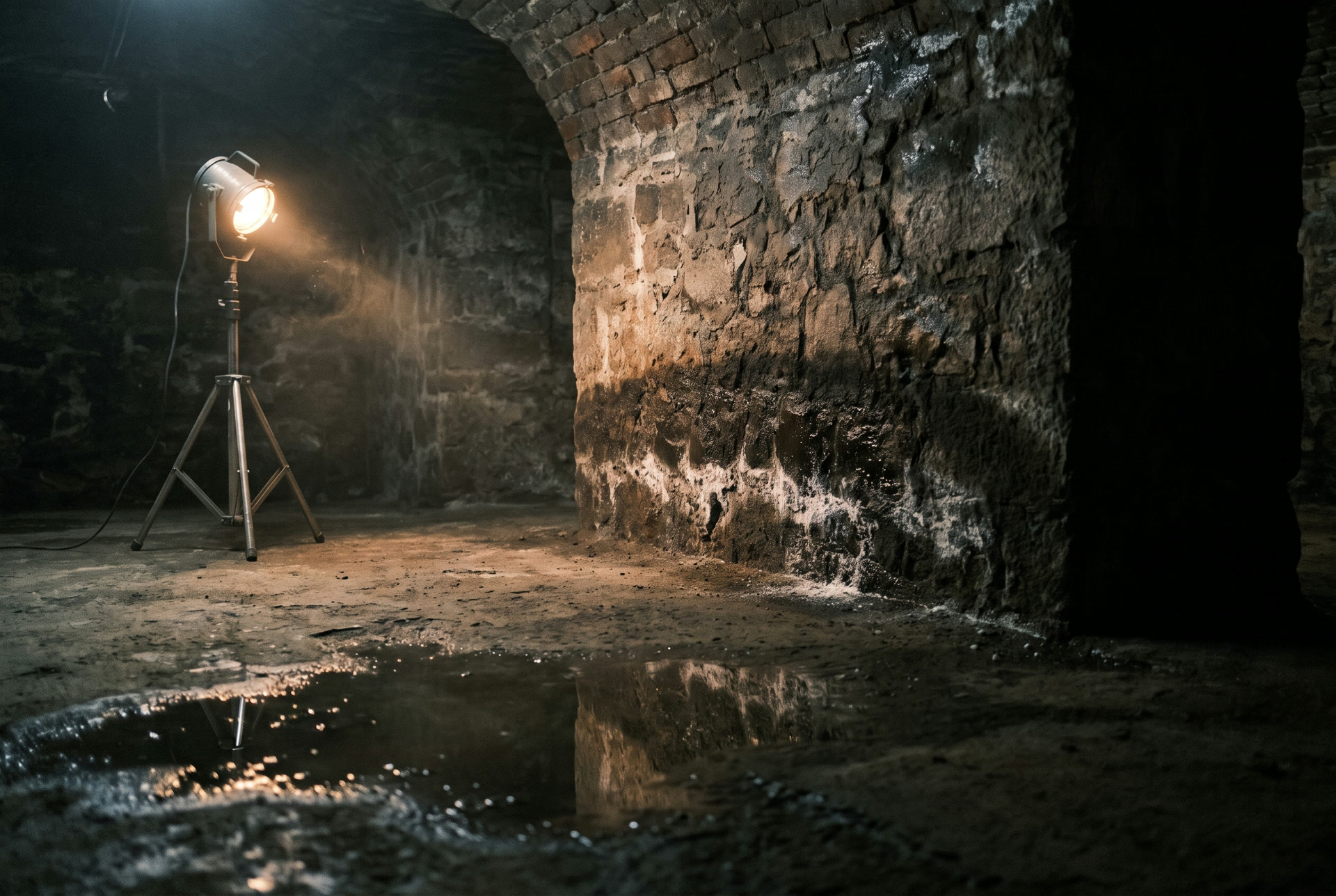
What you see
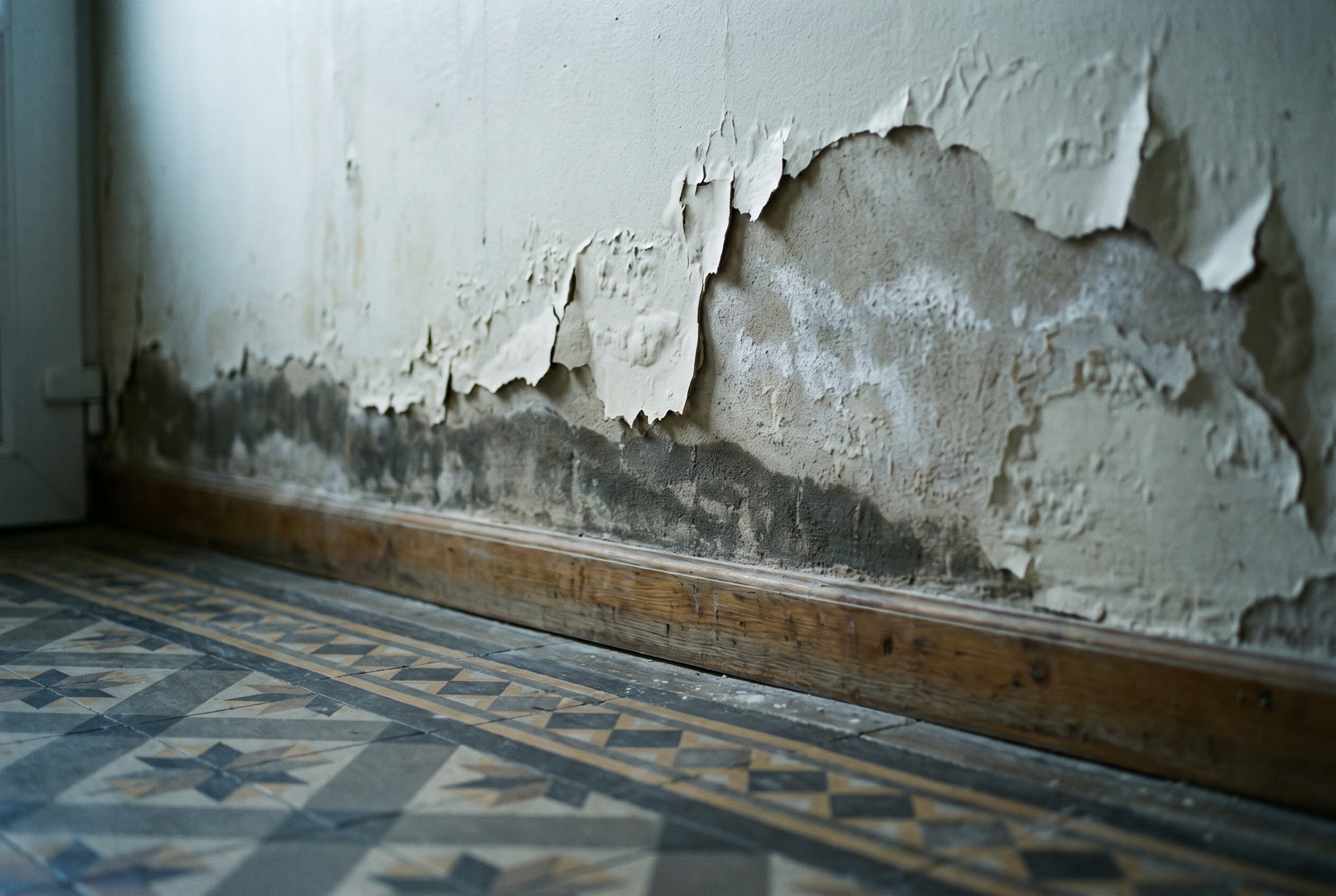
Walls that sweat or powder, a puddle that returns after every heavy rain, a cellar smell rising into the hallway, cardboard boxes going mouldy, render coming off in sheets. Sometimes only a cold, dark band low on the wall while the top stays dry.
Each sign points to a cause. The puddle after rain: water entering through the wall or a light well. Constant sweating: the water table or saturated soil pushing through the brick. The cold band at the bottom: damp rising from the cellar floor.
Where it comes from
The buried wall. On the other side there is wet soil, and nothing in between. The brick drinks.
The water table. In the Senne and Maelbeek valleys, in Anderlecht, Forest, Molenbeek and lower Ixelles, groundwater is close and rises in winter. The cellar ends up below water level a few weeks a year.
The cellar floor. Beaten earth or a slab laid without a membrane: moisture rises through the floor and the foot of the walls.
The drain, where there is one. Often blocked after forty years. The water it was meant to carry away stays against the wall.
Summer. Warm, humid air entering a cold cellar condenses on the walls. Airing a cellar in July makes it wet.
What we do
From outside, when the wall can be reached: dig the soil away, lay waterproofing and a drain, backfill with draining material. This treats the cause. It requires room to dig.
From inside, tanking: a multi-layer waterproof coating that holds back water pushing in from the soil. It makes the cellar dry without touching the garden or the pavement. It needs serious preparation of the wall, and ventilation afterwards.
Through the floor: a slab with a membrane, or a surface treatment depending on the intended use.
Ventilation, in every case: a sealed cellar with no air becomes a condensation box.
What it costs
On the Belgian market tanking is priced most often between 150 and 300 € per m² of treated wall, a drain between 80 and 150 € per metre, and external waterproofing depends on the depth to dig and the access. Indicative ranges, not our rates: yours is put in writing after the visit. 6 % VAT if the home is over ten years old.
Questions
The questions we get.
Is it normal to have a damp cellar?
In a Brussels house from before 1930 it is the rule rather than the exception: the brick touches the soil and nothing separates them. Normal does not mean harmless: the damp climbs into the ground floor, and the floor timbers above eventually suffer.
How do you make a cellar stop being damp?
By knowing first where the water enters: wall, floor, water table or air. Then by blocking it in the right place, outside if you can dig, inside by tanking if not, and ventilating. A dehumidifier alone empties a bucket a day and fixes nothing.
What can you put on the floor of a damp cellar?
Nothing that blocks evaporation without treating the cause: tiles laid on a damp slab push the water up into the walls. If the cellar is to stay a cellar, a permeable floor or duckboards will do. If it is to become a room, it needs a slab with a membrane and tanking.
Is tanking always the answer?
No. On a cellar taking water through a blocked drain or a light well, it costs a lot for nothing. On a cellar where the water table rises and there is no room to dig, it is the right answer. That is why we look before we price.
Also
What often goes with it.
Your request
Describe what you see.
We come and measure within five working days, and the written quote follows within 48 hours. The visit is free and you are not committing to anything.
- Phone0467 88 59 52
- WhatsAppSend a photo
- Emailinfo@freitasgroup.be
- CompanyFreitas Group SRL
BCE 1041.906.890 - LanguagesEnglish, Français, Português
- HoursMon to Fri, 7am to 7pm
Sat, 9am to 1pm